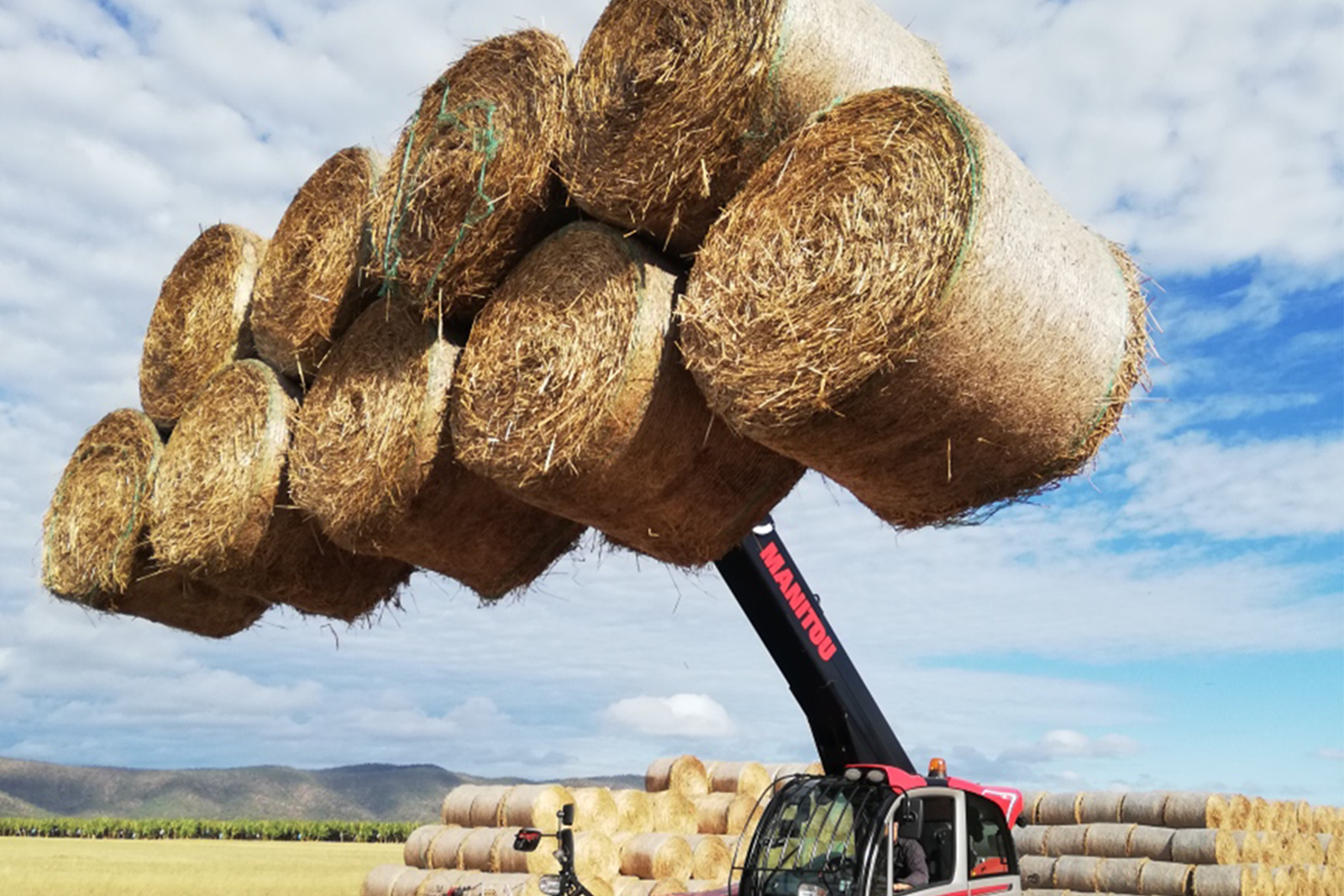
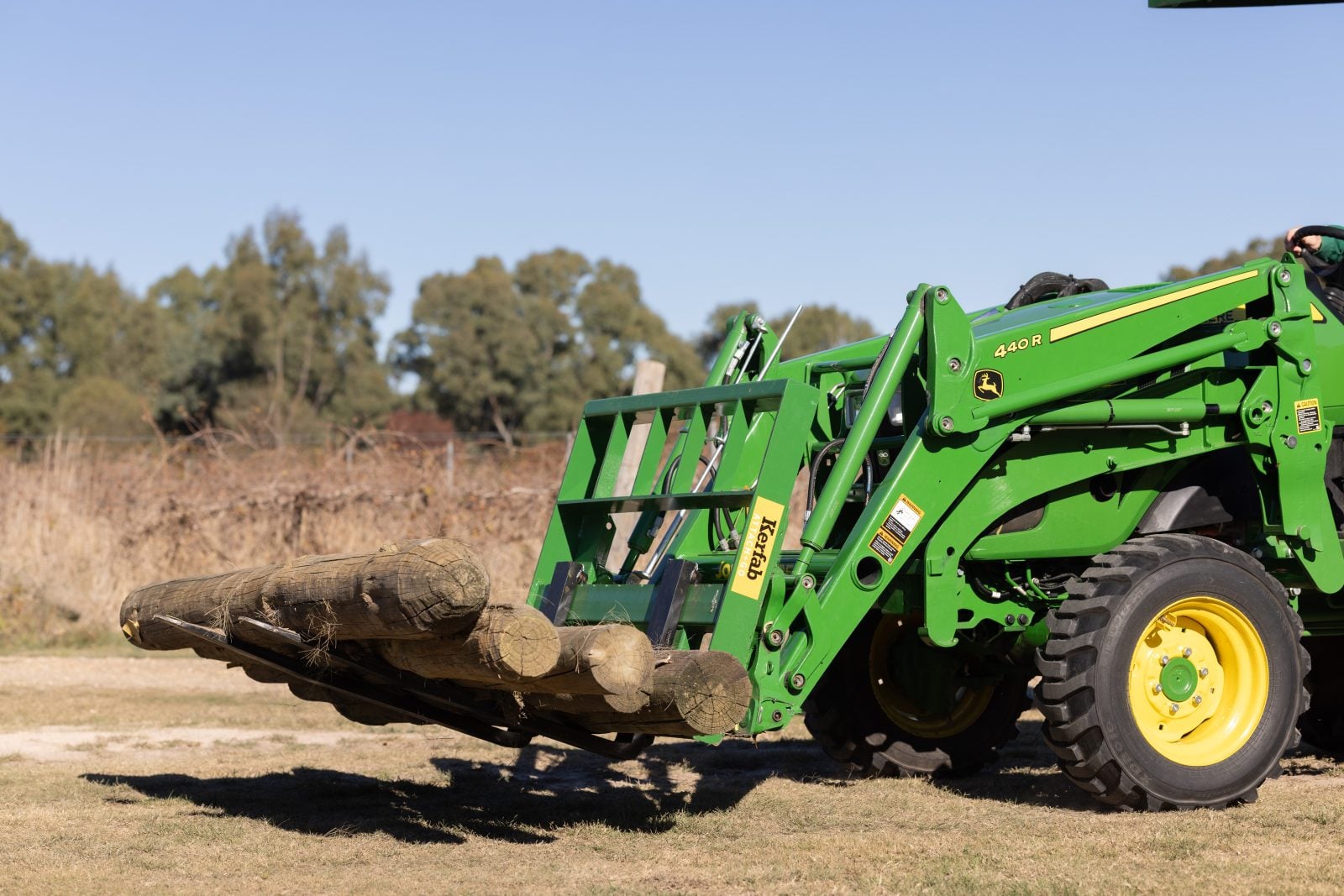
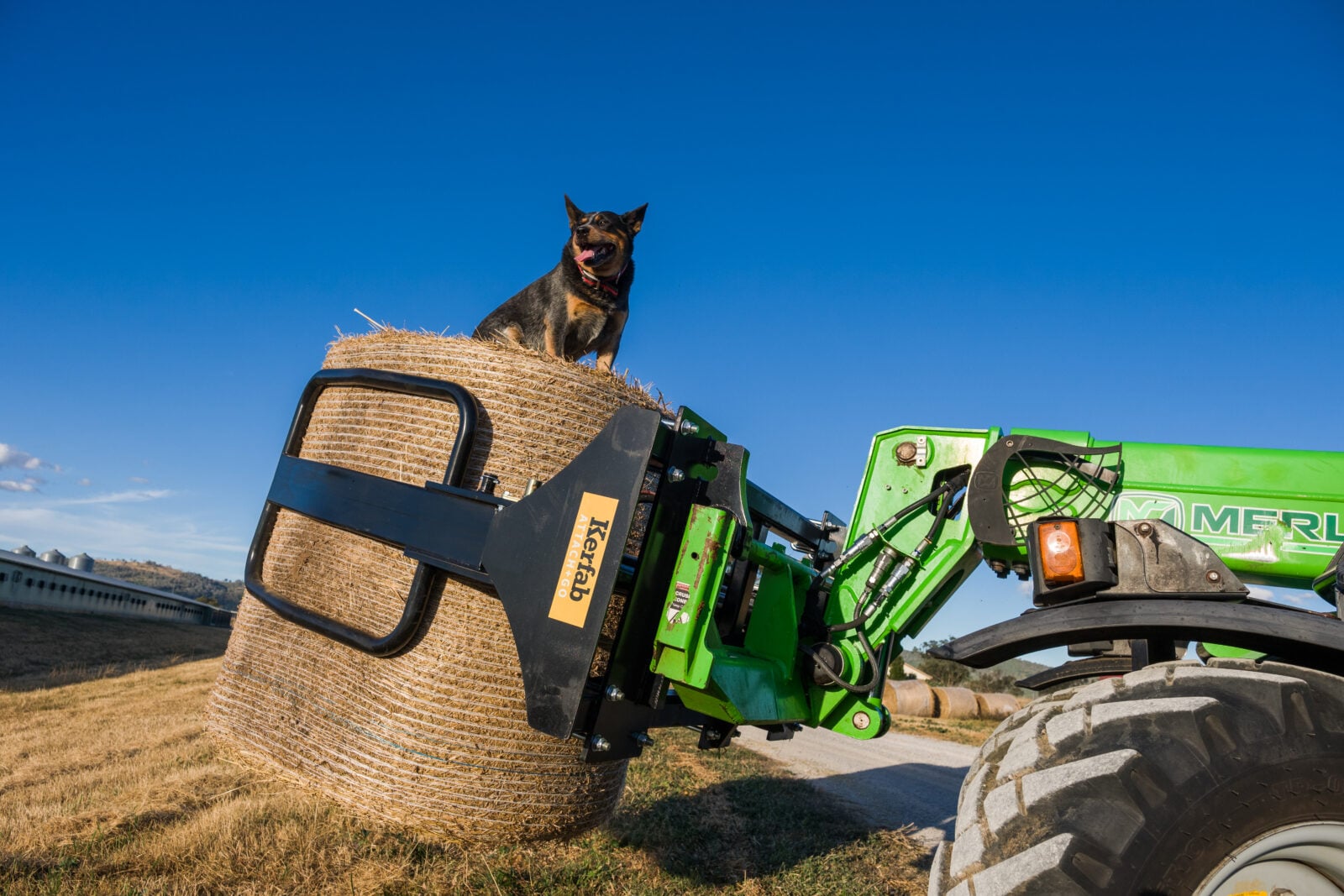
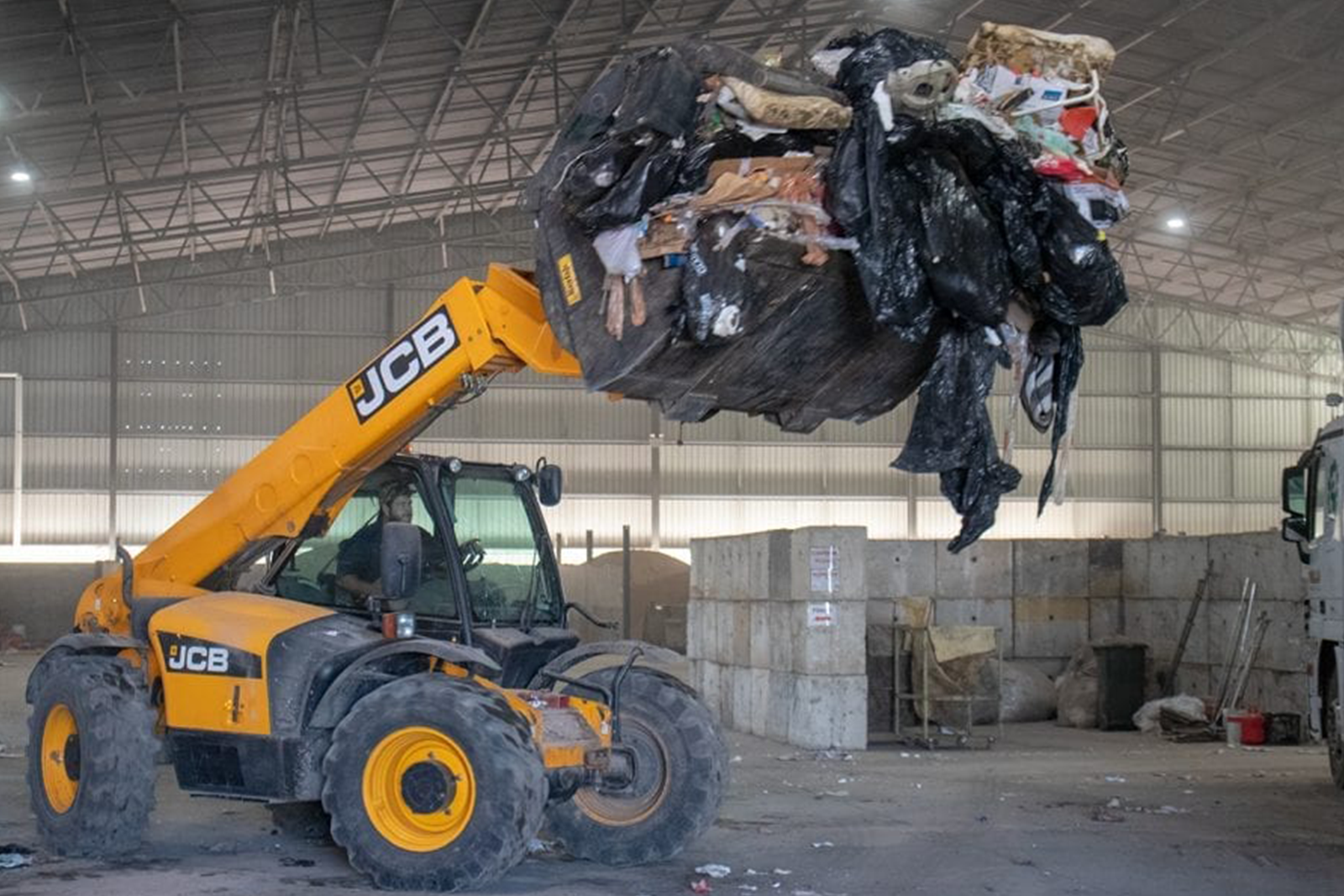
From clearing brush, removing trees and digging up rocks, to filling in holes, smoothing furrows and hills, and removing stumps, land clearing can be back-breaking work. Get the job done quickly, without hassle or injury, with a strong and ever-reliable Kerfab attachment.
At Kerfab, we pride ourselves on helping customers get their jobs done in the quickest and easiest way possible. Designed and manufactured in our local factory, we offer a range of attachments ideal for land clearing, to suit wheel loaders, telehandlers, tractors, skid steers and backhoes.
Everything you need to know about land clearing
What is land clearing?
Land clearing is the direct removal of vegetation cover by humans from forested areas to use the land for purposes such as agriculture, infrastructure, housing development and bushfire management.
This includes first-time clearing of an undisturbed forest as well as the removal of regrowth on previously cleared land.

How land clearing has shaped Australian farming
About two-thirds of Australia’s land is used for farming, with 90 percent of farmland used for grazing livestock on native pastures.
Cattle and sheep grazing is known as pastoralism. It has a long history in rural Australia, taking place on an extensive scale and accounting for considerable economic activity in the nineteenth and early twentieth centuries. During this time, Australia’s output expanded well beyond the needs of the local population, and Australia became one of the world’s major food exporters.
Following The First World War, new areas were cleared for agriculture to provide returned soldiers with both a place to live and an occupation.
Throughout the last 100 years, Australian farmers have enjoyed periods of economic boom and prosperity, but they have also experienced times of extreme hardship, brought about by an unreliable climate and a volatile international market.
These factors have in turn impacted land clearing practices, and land clearing has shaped agriculture.
Land Clearing vs Deforestation
Google the term land clearing and you’re sure to find a lot of articles relating to the destruction of the world’s forests but not so much about the many other forms of land clearing.
Here’s a quick guide to the difference between deforestation and land clearing.
What is deforestation?
Deforestation is when forests are cut down and the area is permanently cleared for another use.
Forests are cleared for a number of reasons such as creating new farmland for food production, timber production, mining and oil extraction.
It is thought that since 1950, more than half of the trees in the world have been lost and upwards of 18 million acres of forest are still being destroyed every year. (Active Wild, 2015)
What is land clearing?
Land clearing the process of removing vegetation, rocks, and obstacles from a parcel of land to increase the usable space or tidy-up debris.
Land clearing is an umbrella term for a lot of different clearing tasks and includes jobs as varied as creating new land for development, preparing the soil before sowing crops, removing obstacles from existing farmland, cleaning up after wild weather and tidying roadways. It even includes bushfire management and some conservation tasks.

What are the benefits of land clearing?
Land clearing has a lot of benefits to Australia’s economy, food production, housing and safety. Here are some of the common reasons land is cleared:
For farmers, land clearing can be used to cultivate the land for crops, make room for livestock or reduce fuel in case of a bushfire. In commercial developments space may be needed for new infrastructures, such as roads, drainage, and buildings. And for the homeowner, land clearing may be about making a previously unusable area more functional.
Regular highway maintenance allows traffic to pass roadside trees and vegetation safely without damage or risk of accident and helps prevent unsafe situations by improving visibility.
Clearing is also an important part of bushfire management, reducing fuel loads and stopping the spread of fire by creating fire breaks.
When might I need to clear my property?
Whether you’re in the agricultural or construction industry, land clearing is a common task required to be done. You may need to clear your property for several reasons, including:
> Preparing fields for sowing
It’s important to prepare the soil properly before sowing new crops and you need to consider your crop varieties, soil type, drainage and size and manoeuvrability of your machinery.
Sometimes this will mean you need to clear the field of trees, rocks and other obstacles first, to move your seeder or harvester around the paddock without causing damage to the machine or property.
> Cleaning up after wild weather
Cleaning up after high-winds, cyclone, flood and other natural phenomenon is a tedious job. Wrestling with tangled debris can be precarious work. While you may want to clean the mess quickly, working too fast or using the wrong equipment can have dangerous consequences.


> Making new land for development or agriculture
Clearing new infrastructure sites, housing developments and broadacre farmland of obstacles and overgrowth that may hinder construction, cropping or grazing takes time, organisation and most of all, hard work.
Locations are often vast, needing large machinery to get push up trees, uncover rocks and clear brush and saplings.
> Creating a bushfire perimeter
Clearing and maintaining defendable space around communities and buildings can increase the chances of important infrastructures, such as community buildings and houses, surviving a bushfire.
Defensible space can be created by clearing a section of trees around a town area or building to create a fire break and removing fuel from the town area by removing debris, reducing undergrowth and pruning trees.
> Creating safer roads and highways
Regular highway verge maintenance allows traffic to pass roadside trees and vegetation safely without damage or risk of accident and helps prevent unsafe situations by improving visibility.
Operators often encounter more than just vegetation when clearing the verge, contending with litter, automotive parts and roadkill among other rubbish.
Land clearing tips & tricks
1. Pick the right tool for the job
Think about the job at hand. Do you need to push, pull, lift or shift? Now look at your machinery; will it do what you need it to? Can it be altered to do the job with an attachment? Once you know what you need, make sure you have the right tools on hand.
Kerfab manufactures a range of attachments that are up to the task. From stick rakes and rock buckets to blades and scrapers, all are built from high-quality steel for guranteed strength and durability.

2. Invest in quality machinery
It’s a saying you hear frequently: invest in quality now for long-term benefits.
It’s fair to say products with more value are also higher quality; they’re made from better materials, treat their staff fairly, have better designs and are made to last. They’re also likely to come with better customer service, from a team you can trust.
So why do so few people follow these words of wisdom? While it may seem convenient to skimp on quality for an unbeatable price tag, the long-term costs suggest otherwise.
It simply makes more sense to pay a larger amount up front than it does to constantly repair and replace broken items, the long-term costs are less and you end up with a better product for a longer amount of time.
3. Got a range of things to get done? Pick an all-rounder.
Do you need the Sir Garfield Sobers of land clearing attachments; a talented all-rounder with the ability to work magic?
While some machinery and attachments are specialists, there’s a whole range of all-rounders that can turn your machine into a multi-tasking marvel.
Need to push, pull, lift and shift? No problems with attachments like the multipurpose grapples and stick rakes.
4. Ask the experts
If you have any questions or would like more information on our range of attachments, feel free to get in contact.
You can reach us by phone on 1800 818 079, email us at sales@kerfab.com.au, or visit us at our Kerang factory – we’re always happy to help.
References:
Bradshaw C; 2012, Little left to lose: deforestation and forest degradation in Australia since European colonization, Journal of Plant Ecology, Volume 5, Issue 1, 1 March 2012, Pages 109–120.
Pollard j, 2008, A hundred years of agriculture, ABS, viewed January 2018.
Active Wild, 2015, What Is Deforestation For Kids: Information And Facts, Active Wild, East Sussex, viewed January 2018. Available here.
The Wilderness Society, 2018, 10 facts about deforestation in Australia, The Wilderness Society, Hobart, Viewed January 2018. Available here.