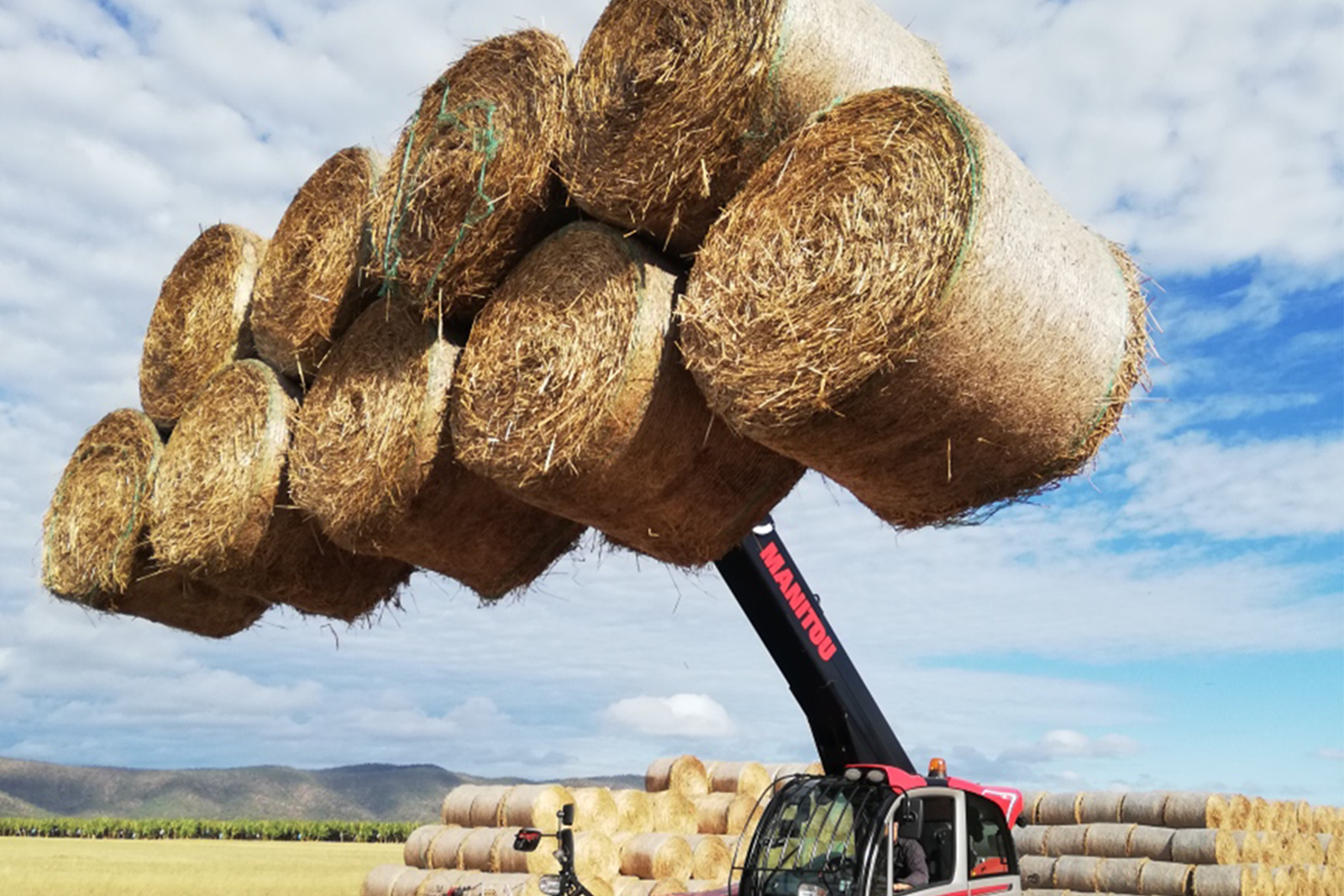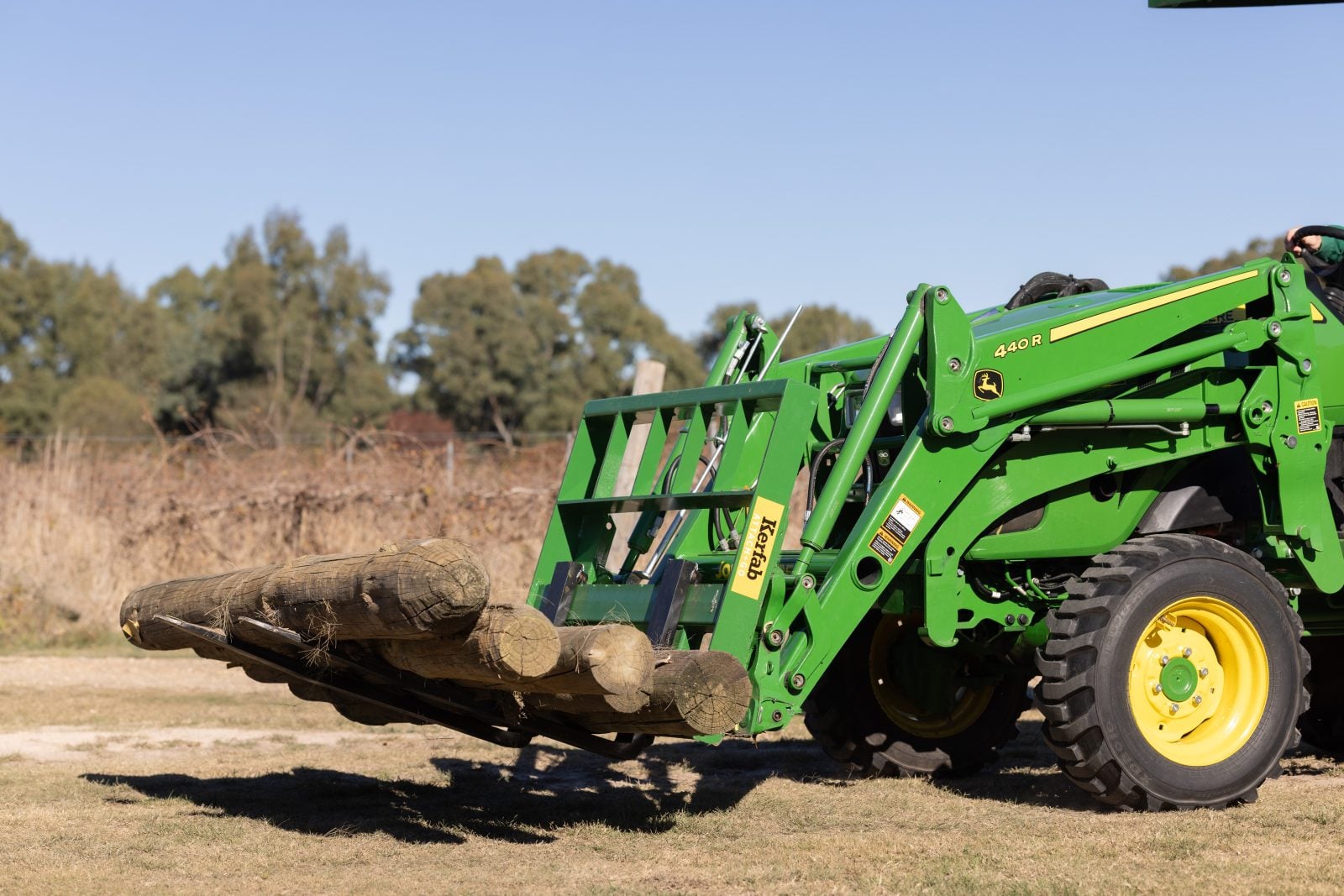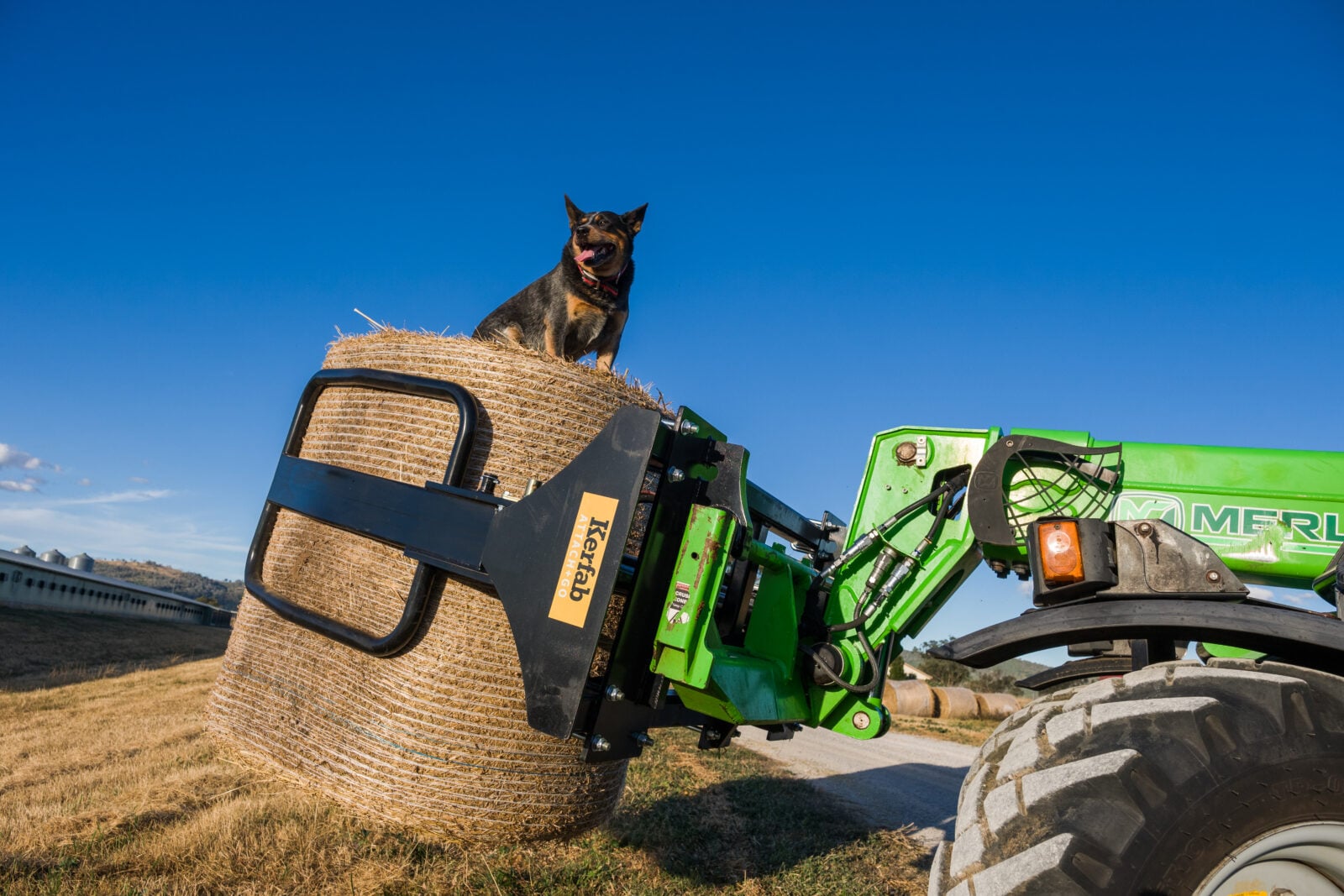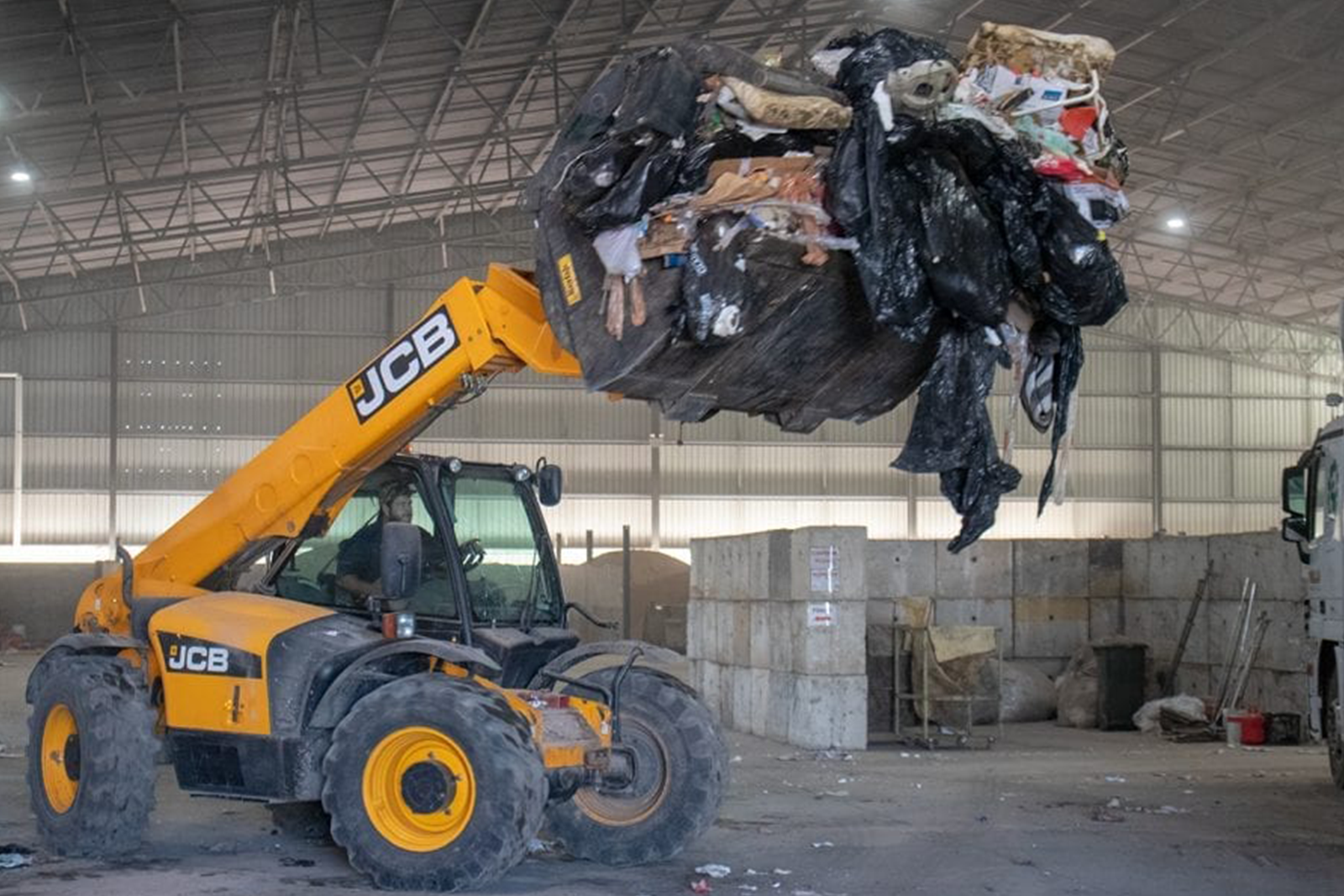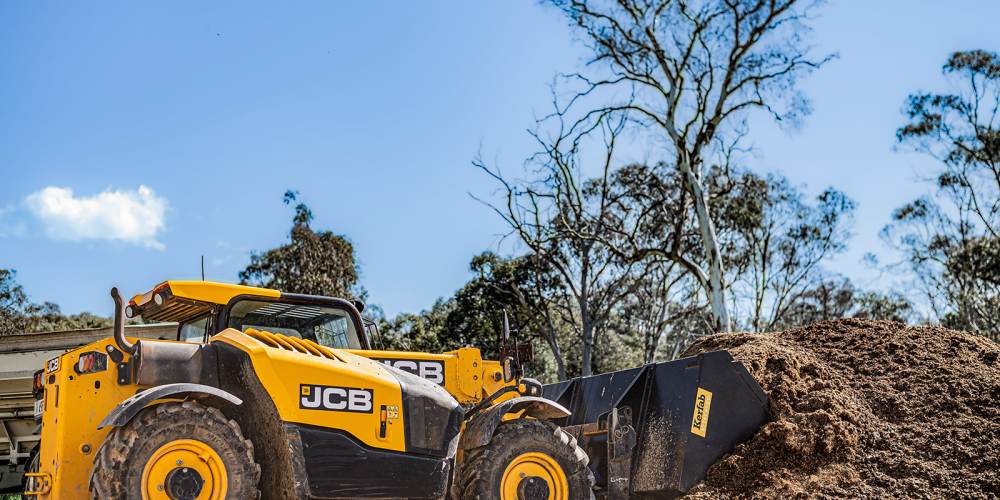
Telehandlers are powerful hybrid machines that can be found on farms and worksites across the country. A cross between a forklift and a crane, these versatile workhorses can perform a variety of useful tasks. Kerfab has worked with the world’s leading telehandler brands like JCB, Manitou, Merlo and Dieci for over 25 years and manufactures an extensive range of attachments to suit all applications.
What is a telehandler?
Telescopic handlers are commonly known as telehandlers, teleporters or boom lifts. Widely used in agriculture and civil industries, they are similar in some ways to a forklift but are also equipped with a boom, making them like a crane too. The telescopic or articulating boom can extend forwards and upwards from the vehicle, and can be fitted with a variety of attachments.
What are some common applications?
Telehandlers can be used to move pallet loads of material from high or unreachable places that cannot be accessed by conventional forklifts. They can remove palletised cargo from within a trailer and place those loads on rooftops or other high places, avoiding the need for a crane to be used. In agriculture, they are commonly used to move loads from wheel loaders or backhoe loaders, and can reach directly into high-sided trailers or hoppers.

What types of attachments do they use?
The most common attachments used with a telehandler are pallet forks. When it comes to the agricultural sector, the most common attachments are buckets or grabs and grapples.
The telehandler can also work with a crane jib for lifting loads, making it compatible with attachments like dirt buckets, grain buckets, rotators and power booms. The ability to work with a variety of useful attachments is what makes the telehandler such a supreme multitasker.
Pros and Cons
Combining the best traits of a crane and a forklift makes the telehandler a versatile and hardworking hybrid, and the wide range of compatible attachments gives it the ability to perform a vast number of useful tasks.
Another benefit is the ability to take advantage of angle and physics. If operators correctly position the arm’s angle and reach they can double or triple how much the machine can safely hold without tipping.
Telehandlers can be dangerous in the hands of inexperienced or untrained operators. The ability to utilise angles can become a safety hazard if done incorrectly – if lifted at a low angle, this can drastically decrease how much the telehandler is capable of holding. This is a hazard which may cause the machine to tip and be destroyed, along with the potential to cause injury or death. Thankfully, most telehandlers have shutoff functions to override operator error.
Light, Standard or Heavy: Which telehandler size do you need?
Here is a quick summary of the three most common telehandler sizes

Light – General agricultural use
These telehandlers range in size from 2 – 4 tonnes, and have a lifting capacity with a reach of between 5 – 7 metres as standard.
Used for: Hay and silage handling, grain handling and general farm work.
Pros: Excellent flexible machine for agriculture and ideal for multi-tasking. Can act as an all-terrain forklift, a loader with bucket. The addition of a hay fork turns it into an excellent hay loading machine.
Cons: Visibility can be an issue when the boom is mounted to the right of the operator. These machines require training in order to understand the limits of the machine, as they can be dangerous if operated by someone inexperienced.

Standard – General use for agricultural and light industrial
These telehandlers are typically 4 – 9 tonne capacity machines with a reach of up to 8 metres.
Used for: High volume farm work like handling fodder and grain. Often used on building and construction sites for general handling and waste collection.
Pros: Great all-rounder on a work site or large farming operation. Ideal for cleaning up on site and lifting materials around site, especially when things get muddy and wet.
Cons: These require strict training and licensing when over 3 tonne lift capacity, so experienced and licensed drivers are required to operate it.

Heavy – Heavy industrial use
The telehandler size within this category is between 3 – 9 tonne capacity, with long reach boom arms up to 17 metres or greater.
Used for: Bulk handling at waste management facilities and general lifting on work sites.
Pros: Excellent machine to have on a waste re-handling site due to its multi-tasking capacity and generous reach for loading high-sided trucks or hoppers. Great ground clearance for dealing with waste, and the large boom machines have incredible reach that is sometimes equivalent to a crane – with the added flexibility of multi-tasking with a bucket, jib or work platform.
Cons: Operating work platform requires extra licensing and very skilled operators. High boom machines pose a risk for operators due to the possible dangers of this height-lifting capacity. Telehandlers occasionally get placed into applications against a wheel loader and too much is expected of the machine, because the tear out force is not equivalent to the wheel loader.